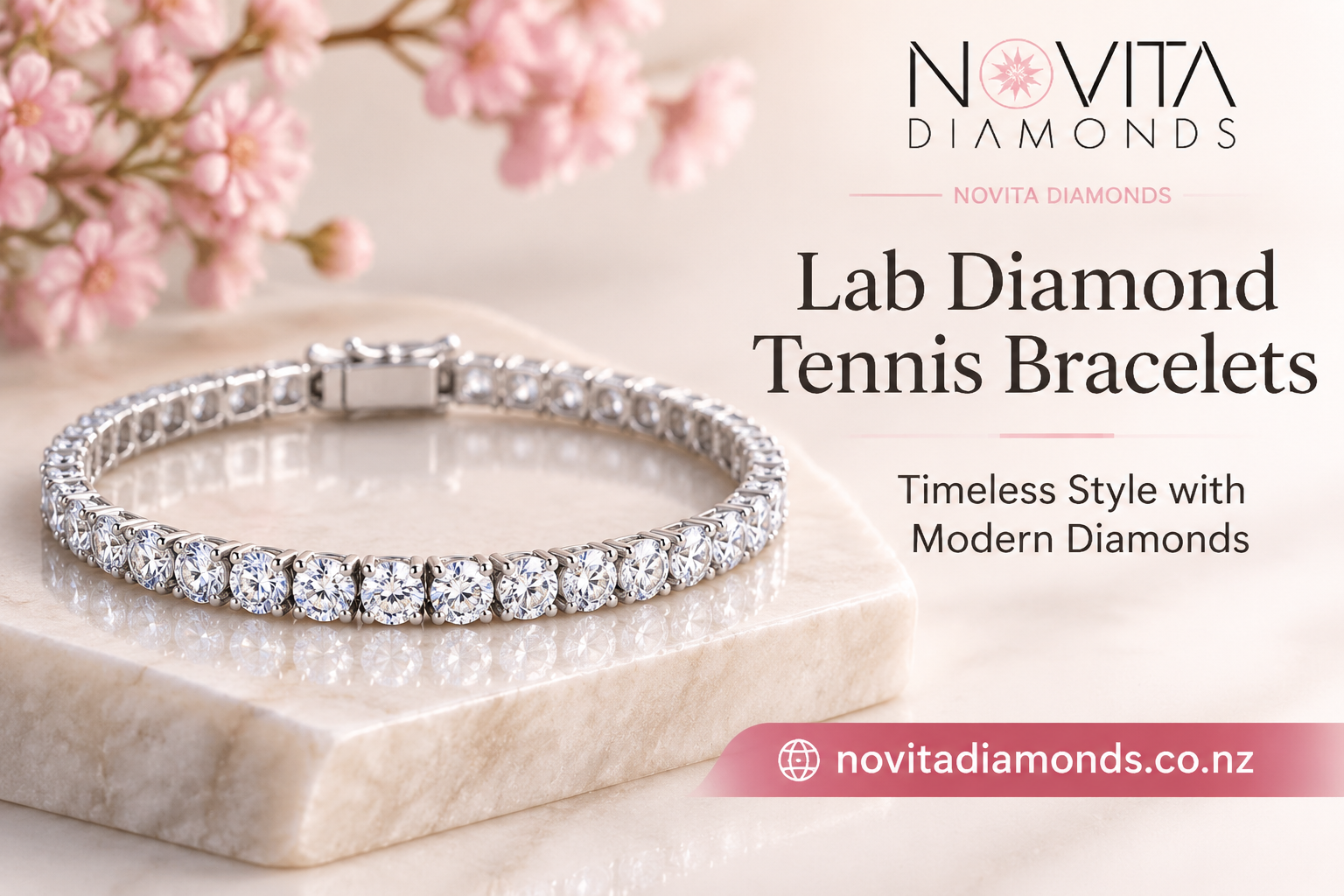
A tennis bracelet looks simple at first glance. A row of diamonds sits close together, creating an even line of sparkle around the wrist. However, small design differences can affect how the bracelet looks, feels and performs during daily wear. Diamond size, link construction, clasp design and metal choice all deserve attention before placing an order.
For New Zealand buyers considering a diamond bracelet, lab diamonds stones offer another option alongside traditionally mined diamonds. They have the same basic chemical composition and crystal structure as natural diamonds, although their origins are different. Understanding the details behind the design makes it easier to choose a piece that suits personal style and practical needs.
Diamond Size Is Only Part of the Design
Carat weight is often the first specification buyers compare. It describes the weight of the diamonds, not their physical size or how large the bracelet appears.
Two bracelets with the same total carat weight can look quite different. One might use many smaller stones, while another features fewer, larger diamonds. The number of stones, their diameter and the spacing between settings affect the finished appearance.
For a delicate bracelet, smaller round diamonds can create a fine, continuous line. Larger stones produce a more noticeable look, but they may also make the bracelet feel heavier.
It is useful to check the approximate diamond measurements in millimetres rather than relying on carat weight alone. A product photograph may make stones appear larger than they are, particularly in close-up images.
Cut and Colour Affect the Overall Appearance
Diamond cut has a direct effect on how much light returns to the eye. Well-proportioned round brilliant diamonds generally produce strong sparkle, while poorly cut stones can appear less lively even when their colour and clarity grades are attractive.
Colour deserves attention too. Diamonds in the same bracelet should have a reasonably consistent appearance. Noticeable differences between individual stones can interrupt the smooth look of the line.
Clarity is another specification, but the highest grade is not always necessary. Small inclusions may be difficult to see without magnification, particularly in smaller bracelet diamonds. Buyers should compare the actual appearance and grading information rather than paying extra for a grade that makes little visible difference.
The Setting Determines How the Bracelet Moves
A tennis bracelet needs to follow the natural shape of the wrist. Its individual sections should move comfortably without twisting excessively or leaving large gaps between the stones.
Prong settings allow light to reach the diamonds from several directions. However, exposed prongs can catch on knitwear and delicate clothing if they are poorly finished.
Bezel settings surround each diamond with metal. They offer more coverage and a slightly different appearance, although the metal can cover part of the stone’s edge.
The flexibility of the links is particularly important. A bracelet that feels too rigid may sit awkwardly, while one with weak connections can be vulnerable to damage. Ask the jeweller about the link construction and whether individual sections can be repaired if necessary.
Choosing Gold or Platinum
The metal changes the overall character of the bracelet and affects how its diamonds appear.
- White gold: Its cool colour creates a bright, consistent appearance alongside white diamonds. It may have rhodium plating that requires occasional renewal.
- Yellow gold: The warm tone creates contrast with the diamonds and works well with other yellow gold jewelry.
- Rose gold: Its pinkish colour offers a softer appearance and pairs well with both casual and formal clothing.
- Platinum: This naturally white metal is valued for its density and durability, although it can feel heavier on the wrist.
For New Zealand buyers, checking the stated gold purity is worthwhile. An 18-karat gold bracelet contains 75% gold and is commonly marked 750. The remaining alloy metals influence its colour and physical properties.
Check the Clasp Before Ordering
A secure clasp is essential because a tennis bracelet can slip off the wrist if its fastening fails.
Many designs use a box clasp with an additional safety latch. The main clasp holds the bracelet closed, while the safety mechanism provides another layer of security.
Before ordering, ask whether the clasp has been tested for a secure fit and whether it can be adjusted. A bracelet should close firmly without requiring excessive force.
The safety chain, if included, should also allow enough movement for comfortable wear. Its purpose is to help retain the bracelet if the main fastening opens unexpectedly.
Getting the Right Fit for Your Wrist
A tennis bracelet should have enough room to move naturally without sliding too far down the hand.
A simple way to estimate the required length is to measure around the wrist with a flexible tape. Then discuss the preferred fit with the jeweller. Some people prefer a closer fit, while others like additional movement.
For online orders within New Zealand, check the available bracelet lengths, adjustment options, delivery arrangements and return conditions before paying. Custom sizing may be possible, but it is worth confirming whether an adjusted piece can still be returned or exchanged.
What to Check in a Lab-Grown Diamond Bracelet
Lab-grown diamonds are real diamonds, but buyers should still review the specifications of the individual stones. Ask whether grading documentation is available, which laboratory issued it and whether the report covers the entire bracelet or selected diamonds.
The documentation should clearly identify the stone’s laboratory-grown origin where applicable. Also check the total carat weight, diamond count, metal purity and setting details.
Those comparing designs can review the lab diamond tennis bracelet collection at Novita Diamonds as a reference when considering diamond arrangements, bracelet styles and specifications.
Maintenance and Long-Term Wear
Even well-made jewelry needs regular care. Lotion, soap, dust and natural skin oils can collect around the settings and reduce the diamonds’ brightness.
Clean the bracelet using warm water, mild soap and a soft brush, provided the jeweller confirms this method is suitable for its construction. Avoid harsh cleaning chemicals and ultrasonic cleaners unless the manufacturer recommends them.
It is also sensible to have the settings inspected periodically. Loose stones, worn links and damaged clasps should be checked before they cause a larger problem.
A carefully selected tennis bracelet should feel comfortable, sit correctly and have secure connections between its stones. Paying attention to these details helps buyers choose a piece that suits their preferred appearance and the way they intend to wear it.